Beauty & Cosmetics Product Photography: Swatches, Texture Macros & Regulatory Claims
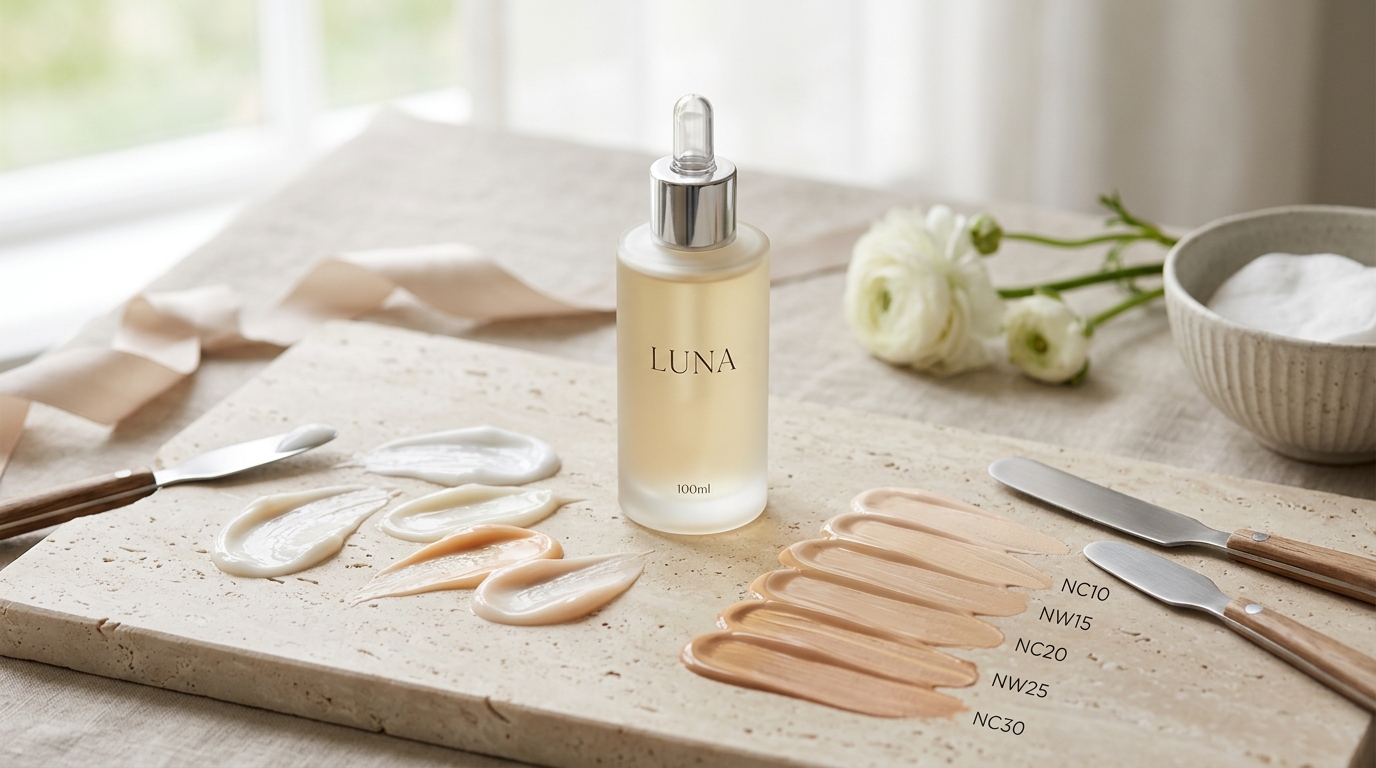
High-converting beauty listings combine calibrated pigment swatches, texture close-ups, and transparent ingredient labeling.
In beauty and personal care e-commerce, imagery carries an extraordinary burden. Unlike fashion, where garments drape over standardized forms, or consumer electronics, where technical spec sheets quantify performance, cosmetics and skincare are fundamentally sensory and intimate. Online shoppers cannot pump a serum onto their fingertips to test its absorption rate, swipe a lipstick across their wrist to check undertones under ambient lighting, or smell a botanical cleanser.
Consequently, the product detail page gallery must act as a digital sensory surrogate. A prospective buyer relies entirely on high-resolution photography to evaluate shade fidelity across varying skin tones, inspect product viscosity and finish (matte, dewy, satin, or velvet), and verify the mechanical ergonomics of droppers, airless pumps, and compact hinges.
At the same time, cosmetics exist in one of the most rigorously policed regulatory environments in retail. Regulators including the U.S. Food and Drug Administration (FDA), the Federal Trade Commission (FTC), India's Central Drugs Standard Control Organisation (CDSCO), and marketplace compliance algorithms on Amazon and Walmart actively monitor product imagery for deceptive claims. Misrepresenting results through digital airbrushing, making unsubstantiated anti-aging drug claims on infographics, or using illegal 'FDA Approved' badges can result in immediate listing suppression or account suspension.
This guide provides the complete 2026 operational handbook for beauty and cosmetics product photography: shade swatch grids, texture macro captures, packaging transparency, regulatory compliance boundaries across major marketplaces, and a battle-tested 7-image gallery blueprint.
Don't build compliant listing images by hand
Paste your Amazon, Flipkart, Walmart, or Meesho product link or upload phone shots. Picmato plans a 9-image set for your product: studio white-ground hero, lifestyle scenes, and feature infographics.
How to Build a Compliant, High-Converting Cosmetics Listing Image Set
Follow these 6 steps to produce a certified, top-ranking beauty product gallery covering calibrated shade swatches, macro textures, and regulatory-approved infographics.
Capture the pure white hero shot of bottle and retail carton
Clean the cosmetic bottle thoroughly with a microfiber cloth to remove dust and fingerprints. Position the primary container outside its carton, filling 85% to 90% of the frame on a pure white background (RGB 255, 255, 255) with zero decorative props.
Photograph the multi-skin-tone shade swatch grid
Apply uniform, deliberate strokes of product across the inner arms of models representing diverse skin tones (Fair, Medium, Tan, Deep). Illuminate under calibrated 5500K lighting and annotate with clear Warm, Cool, or Neutral undertone labels.
Shoot extreme 1:1 macro photos of product viscosity and texture
Capture a suspended serum droplet hanging from a glass pipette, a rich cream peak swirled onto an acrylic tile, or an embossed powder pan to communicate true formula consistency and dry finish (matte, dewy, or satin).
Create the active ingredient and botanical infographic
Design a clean feature infographic highlighting key active ingredients with declared percentages (e.g., Niacinamide 5%, Hyaluronic Acid). Pair with approved cosmetic benefit statements ('enhances surface radiance') while strictly avoiding prohibited drug claims.
Document dispensing ergonomics and packaging seals
Photograph close-up views of the calibrated dropper markings, airless pump mechanism, tamper-evident seals, or magnetic compact closures to reassure shoppers of leak-proof durability and hygienic dispensing.
Assemble certified transparency, INCI ingredients, and study disclosures
Include a crisp, zoomable photo of the complete INCI ingredient panel from the physical packaging. Incorporate substantiated Cruelty-Free badges and, if presenting clinical study results, disclose duration and sample size clearly.
The Sensory Gap: Why Cosmetics Listings Suffer High Return Rates
Return rates in online beauty and color cosmetics average between 12% and 22%, with foundation, concealer, and lip products experiencing the highest return frequency. According to e-commerce return analytics, over 65% of cosmetics returns are categorized under 'shade did not match appearance online' or 'texture was different than expected.'
This return friction stems from what retail behavioral researchers call the 'Sensory Gap.' In a physical department store or beauty boutique, consumers make purchasing decisions through tactile sampling. They swatch pigments against their inner wrist, examine how light reflects off mica particles, and test whether a cream feels greasy or lightweight.
When an online listing relies solely on a computer-generated pack rendering and a single flat color circle, shoppers guess their shade and texture. When the physical package arrives, even minor discrepancies in warm, cool, or neutral undertones lead to immediate customer dissatisfaction, negative reviews, and expensive reverse logistics that cannot be resold due to hygiene and health regulations.
Bridging this sensory gap requires a deliberate image architecture: true-to-life pigment swatches photographed across diverse Fitzpatrick skin phototypes, extreme macro shots that reveal emulsion viscosity, and realistic application tutorials.
The Multi-Skin-Tone Swatch Grid: Eliminating Shade Return Surges
For color cosmetics (foundations, concealers, tinted moisturizers, lipsticks, and blushes), a single swatch on an isolated arm is no longer acceptable. Leading beauty marketplaces and consumers demand swatch grids that demonstrate how pigments behave across diverse skin tones and undertones.
To build an authoritative, high-converting swatch infographic, brands follow a rigorous photographic standard based on the dermatological Fitzpatrick Scale (phototypes I through VI, ranging from very fair to deeply pigmented skin):
- Calibrated Color Pipeline: All swatch photography must be shot under standardized 5500K daylight-balanced continuous studio lighting with a calibrated X-Rite ColorChecker in the frame to ensure exact sRGB color reproduction.
- Multi-Tone Arm Grids: Display the exact same pigment stroke across a minimum of three—and ideally four to six—diverse arm tones (Fair, Light, Medium, Tan, Deep) in a side-by-side vertical or horizontal comparison.
- Undertone Categorization: Explicitly label each shade with its dominant undertone: Warm (golden/yellow/peach), Cool (pink/red/blue), or Neutral (balanced mix).
- Application Density: Display both a concentrated heavy swipe (to show saturated pigment) and a blended feather (to show how the formula diffuses on skin).
- Finish Representation: Use controlled side lighting to reveal the true dried down finish—whether it reflects light like a dewy glaze, absorbs light like a velvet matte, or sparkles like metallic shimmer.
Texture & Viscosity Macros: Communicating Formula Finish
Skincare consumers want to know exactly how a product will feel on their skin before opening their wallet. Capturing the tactile essence of emulsions, balms, oils, and exfoliants requires dedicated macro photography.
A texture macro is not a decorative artistic flourish; it is functional technical communication. Key techniques include:
1. The Dropper Pipette Bead: For facial serums and oils, capture a suspended droplet hanging from the glass pipette tip at a 1:1 macro reproduction ratio. The bead's surface tension, clarity, and bubble suspension visually convey viscosity without a single word of copy.
2. The Cream Swirl & Peak: For moisturizers and balms, use a clean cosmetic spatula to create a textured dollop on a glass or acrylic slab. Stiff peaks communicate rich, occlusive night-cream hydration, while a translucent, melting spread communicates lightweight gel-cream absorption.
3. The Powder Press & Shatter: For pressed powders and eyeshadows, capture both the embossed compact pan and a delicate crumbed swatch to demonstrate powder micro-milling, softness, and fallout characteristics.
4. The Clay & Particle Spread: For exfoliating scrubs and clay masks, macro shots must clearly showcase physical granules (e.g., jojoba beads, volcanic ash) to establish particle size and density.
The 'Before & After' Minefield: FTC, Amazon & Walmart Regulatory Rules
Before/After comparison photos are among the highest-converting visual assets in skincare marketing—and simultaneously the most scrutinized by regulatory bodies and marketplace enforcement teams. One non-compliant Before/After graphic can trigger immediate ASIN suppression, listing removal, or formal FTC investigation.
Under Section 5 of the FTC Act and 16 CFR Part 255 (FTC Guides Concerning the Use of Endorsements and Testimonials in Advertising), any comparison image that exaggerates product efficacy or uses artificial enhancements constitutes unlawful deceptive advertising.
Both Amazon Seller Central (Help Document: Beauty Style Guide) and Walmart Marketplace Learn maintain strict enforcement standards against manipulative Before/After images:
| Compliance Factor | Permitted Photographic Practice | Strictly Prohibited & Suppression Triggers |
|---|---|---|
| Digital Retouching & AI | Raw, unretouched high-resolution photos showing genuine skin texture and natural pores. | AI skin smoothing, digital spot removal, Photoshop healing brushes, or digital wrinkle blurring. |
| Lighting & Exposure | Identical studio light setup, identical camera angle, white balance, and shutter speed for both frames. | Dim/shadowed 'Before' frame juxtaposed against bright, overexposed, diffusion-softened 'After' frame. |
| Facial Expression & Pose | Neutral facial expression, matching focal distance, and identical head tilt in both captures. | Frowning, squinting, or tense 'Before' versus smiling, relaxed, or tilted 'After' shot. |
| Results Substantiation | Explicit disclosure of testing conditions: e.g., 'Results after 4 weeks of twice-daily use in a 30-person study.' | Cherry-picked, atypical extreme outliers presented as guaranteed, universal, or permanent results. |
| Model Consistency | The exact same human subject photographed across the timeline under documented study supervision. | Different human subjects, stock photography models, or AI-synthesized character faces used to simulate progress. |
| Cosmetic vs Drug Boundary | Visual improvements in skin appearance, radiance, hydration, and cosmetic surface smoothness. | Claiming or visually illustrating medical cure of clinical conditions: eczema, severe cystic acne, rosacea, or psoriasis. |
Cosmetic vs Drug Claims: The FDA & CDSCO Legal Line
In e-commerce listings, many sellers inadvertently trigger severe compliance penalties by confusing cosmetics with over-the-counter (OTC) drugs on secondary infographic banners.
Under the U.S. Federal Food, Drug, and Cosmetic Act (FD&C Act) Section 201(i), a cosmetic is defined as an article intended to be rubbed, poured, sprinkled, or sprayed on the human body for 'cleansing, beautifying, promoting attractiveness, or altering the appearance.'
In contrast, FD&C Act Section 201(g)(1) defines a drug as an article intended for use in the 'diagnosis, cure, mitigation, treatment, or prevention of disease' or intended to 'affect the structure or any function of the body of man.'
If your secondary image claims your serum 'reverses cellular skin aging', 'treats cystic acne', 'stimulates hair follicle regrowth', or 'repairs damaged DNA', regulatory agencies classify your product as an unapproved new drug. On Amazon, this triggers immediate pesticide/drug bot classification, de-indexing your listing and blocking FBA inventory transfers.
Similarly, in India under the CDSCO Cosmetics Rules 2020 and the Drugs and Cosmetics Act 1940, cosmetic products cannot claim therapeutic, medicinal, or pharmacological actions. Sunscreens, anti-dandruff shampoos containing ketoconazole, and acne treatments containing high-percentage salicylic acid must comply with specific drug monographs and carry certified manufacturing licences.
- Permitted Cosmetic Phrases: 'Helps improve the appearance of fine lines', 'Deeply hydrates and nourishes skin', 'Enhances surface radiance and glow', 'Gently clarifies surface pores'.
- Prohibited Drug Claims (Unless formally registered as OTC Drug): 'Cures acne and blemishes', 'Erases deep wrinkles permanently', 'Stimulates collagen synthesis at a cellular level', 'Treats eczema, rosacea, or dermatitis'.
- The 'FDA Approved' Trap: The FDA regulates cosmetics but DOES NOT approve individual cosmetic products or facilities. Displaying an 'FDA Approved' seal on your listing images is an automatic rejection trigger on Amazon and Walmart.
Packaging Ergonomics: Showcasing Pumps, Droppers & Dispensers
Cosmetics shoppers care deeply about functional packaging mechanics. Many customer complaints and low star ratings stem not from the chemical formula, but from defective, leaky, or frustrating packaging dispensers.
Dedicate at least one image in your secondary gallery to packaging engineering and dispensing mechanics:
1. Airless Pump Cross-Sections: For active skincare formulations (Vitamin C, Retinoids) sensitive to light and oxidation, illustrate how your airless pump prevents oxygen contact and ensures 100% evacuation without product waste.
2. Dropper Calibration: Showcase whether your pipette has graduated dosage markings (e.g., 0.5 ml, 1.0 ml) to assist users in applying the precise recommended treatment amount.
3. Hygienic Scoops & Compact Closures: For jars, display the included cosmetic spatula to reassure shoppers regarding hygienic application. For compacts and lipsticks, highlight magnetic closures, travel-friendly twist locks, and sturdy internal mirrors.
4. Net Contents & Fill Line: Avoid customer accusations of 'half-empty bottles' by clearly illustrating the bottle capacity alongside declared net weight/volume matching your listing title exactly.
Substantiating Badges: Clean, Cruelty-Free, Vegan & Eco-Packaging
Modern beauty consumers prioritize ethical, clean, and sustainable formulations. However, slapping arbitrary trust badges onto secondary infographics without verification will lead to policy warnings.
Marketplaces require that any trust mark, seal, or certification displayed on listing images be verifiable and substantiated:
1. Cruelty-Free & Animal Testing: In India, CDSCO Cosmetics Rules 2020 strictly ban animal testing for cosmetics. In the US and EU, brands utilizing the Leaping Bunny (Cruelty Free International) or PETA Beauty Without Bunnies logo must be officially registered licensees. Creating a generic bunny icon with the text 'Cruelty-Free' without internal testing documentation exposes the brand to false advertising challenges.
2. Vegan Formulations: If displaying a Vegan certification, verify that all formulation inputs—including emulsifiers, colorants (such as carmine derived from cochineal insects), and thickeners (such as animal-derived tallow or beeswax)—are 100% plant-based or synthetic.
3. 'Clean Beauty' Standards: Because 'clean' is not a legally defined regulatory term, reputable brands specify their standard by displaying a clear 'Formulated Without' checklist on secondary infographics (e.g., 'Free from parabens, sulfates (SLS/SLES), phthalates, synthetic fragrances, and mineral oil').
4. Sustainable & Post-Consumer Recycled (PCR) Materials: If claiming eco-friendly packaging, state exact percentages: e.g., 'Bottle made from 50% Post-Consumer Recycled Glass; FSC-Certified Paperboard Outer Box.'
The 7-Image High-Converting Beauty Gallery Blueprint
To maximize search impressions, customer dwell time, and conversion while maintaining strict regulatory compliance across Amazon, Flipkart, and Walmart, top beauty brands utilize a standardized 7-image gallery blueprint:
| Slot Position | Visual Framework | Primary Conversion & Compliance Objective |
|---|---|---|
| Slot 1: Main Hero | Pure White Background Hero (Bottle/Compact + Outer Box) | Zero props or digital shadows. Product fills 85-90% of frame. Shows both unboxed primary container and retail packaging box. |
| Slot 2: Pigment Swatch | Multi-Skin-Tone Shade Grid | True-to-life pigment strokes across Fitzpatrick phototypes (Fair, Medium, Tan, Deep) with warm/cool/neutral undertone labels. |
| Slot 3: Formula Macro | Texture & Viscosity Close-Up | Extreme 1:1 macro of droplet, cream peak, or powder spread showing formula consistency, absorption, and true dry finish. |
| Slot 4: Key Actives | Active Ingredient Breakdown | Highlights key ingredients (e.g., Niacinamide, Hyaluronic Acid) with declared percentages and cosmetic appearance benefits. |
| Slot 5: Application Ritual | Step-by-Step How-To Routine | Guides the shopper through proper application: dosage amount, AM/PM routine order, and complementary skincare steps. |
| Slot 6: Packaging Mechanics | Dispenser & Travel Ergonomics | Close-up of airless pump, calibrated dropper, leak-proof seal, or magnetic compact lock to reassure build quality. |
| Slot 7: Certified Transparency | Full INCI List & Trust Badges | Full legible ingredient declaration, legitimate cruelty-free/vegan marks, dermatologist-tested note, and consumer study metrics. |
Where AI Imagery Fits in Beauty E-Commerce (And Where It Is Prohibited)
Artificial intelligence and synthetic media have become standard tools in e-commerce asset production, but beauty brands must exercise extreme care regarding where AI is applied.
Where AI is Permitted and Valuable:
1. Lifestyle Staging & Background Placement: Placing an authentic, studio-photographed cosmetic bottle onto an AI-generated marble bathroom vanity, luxury spa shelf, or tropical botanical setting. This allows brands to generate premium editorial lifestyle context at a fraction of the cost of physical location shoots.
2. Abstract Ingredient Visualizers: Generating atmospheric, stylized backgrounds illustrating botanical source plants (e.g., Centella Asiatica leaves, rosehip blossoms, aloe vera) behind verified product containers.
3. Multi-Platform Aspect Ratio Adaptation: Generating extended background environments to transform a 1:1 square Amazon image into a 9:16 vertical TikTok Shop creative or a 4:5 Instagram feed format.
Where AI is Strictly Prohibited by Policy:
1. Synthetic Pigment Swatches: Never generate cosmetic swatches using AI diffusion models. AI renderers hallucinate lighting and skin interaction, resulting in shade mismatches and surging return rates. Swatches must be real physical pigment applications.
2. Simulated Before/After Skin Transformations: Generating fake 'Before' or 'After' skin textures using AI prompt filters constitutes fraud under FTC guidelines and Amazon Seller Central policies.
3. Packaging Proofs & Gating Verification: Detail page compliance submissions and ingredient panels must be authentic physical photographs, not synthetic 3D renders.
Pre-Upload Beauty Listing Checklist
Before publishing new cosmetics listing assets across Amazon, Walmart, or Flipkart, conduct a systematic quality and compliance audit against this operational checklist:
- Hero Image Compliance: Pure white background (RGB 255, 255, 255), zero props, product occupies 85% to 90% of frame, unboxed container clearly visible.
- Resolution Thresholds: All images uploaded at minimum 2,000 x 2,000 pixels (or 2K/4K) to enable high-magnification hover zoom on fine packaging print.
- Color Pipeline Calibration: Swatch photography calibrated under 5500K daylight with sRGB profile embedded to avoid display color skew.
- Undertone Documentation: All color cosmetic shades clearly classified by undertone (Warm, Cool, Neutral) across multiple skin tones.
- No Prohibited Medical Claims: Zero drug claims ('cures acne', 'reverses aging', 'eliminates wrinkles') on secondary infographics.
- No Illegal 'FDA Approved' Badges: Removed all unapproved regulatory badges and substantiated all Cruelty-Free / Vegan certifications.
- Legible Ingredient Panel: Secondary gallery includes a crystal-clear, high-zoom shot of the full INCI ingredient list matching the physical box.
- Realistic Before/After Disclosures: Any comparison graphic features identical lighting, neutral expressions, and prominent disclosure of clinical study parameters.
Frequently asked questions
Can I use AI to generate makeup swatches for my Amazon listing?
No. Generating cosmetic shade swatches using AI image generators is strongly discouraged and risks violating marketplace accuracy policies. AI models hallucinate color blending, skin undertone interactions, and specular reflection, creating an inaccurate representation of the physical pigment. This leads directly to customer shade mismatch complaints, negative reviews, and high return rates. Always photograph physical pigment swatches applied to human skin under standardized 5500K studio lighting.
Are 'Before and After' photos allowed on Amazon beauty listings?
Before and After photos are permitted in secondary gallery slots and A+ Content only if they depict authentic, unretouched results from documented testing. They are strictly prohibited from the main hero image. To comply with Amazon policy and FTC advertising guides, both images must share identical lighting, camera distance, and facial expressions, without digital skin smoothing or Photoshop retouching. You must also include prominent substantiation text disclosing the study duration, participant count, and that individual results may vary.
What is the difference between a cosmetic claim and a drug claim on product infographics?
Under FDA and CDSCO regulations, cosmetic claims pertain to cleansing, beautifying, or altering surface appearance (e.g., 'improves the appearance of fine lines', 'enhances skin radiance'). Drug claims describe treating, preventing, or curing diseases, or altering physiological body functions (e.g., 'cures acne', 'stimulates collagen production', 'eliminates eczema'). If a non-OTC cosmetic infographic includes drug claims, marketplaces will flag the ASIN as an unapproved drug and suppress the listing.
Why does Amazon reject beauty hero images showing fruit or flower petals?
Amazon's Main Image Standards require that the hero image depict only the physical product being purchased, without extraneous props. While ingredients like avocado, rose petals, or honey communicate natural botanicals, displaying them on the main white-background image confuses customers regarding what is included in the package and triggers automated suppression. Botanical props and raw ingredients are welcome in secondary gallery slots and A+ Content.
Can I display an 'FDA Approved' logo on my skincare listing images?
No. The U.S. FDA regulates cosmetic products and ingredients but does not 'approve' cosmetic brands, formulations, or manufacturing facilities (unlike new pharmaceutical drugs). Placing an 'FDA Approved' seal or using the official FDA logo on cosmetics marketing imagery is considered false and misleading advertising, leading to immediate suppression on Amazon, Walmart, and other major marketplaces.
What image resolution is recommended for beauty product detail pages?
Upload beauty listing images at a minimum of 2,000 x 2,000 pixels, with 2K or 4K resolution preferred. Beauty shoppers extensively use hover-to-zoom to read fine INCI ingredient print on the back of the bottle, inspect dispenser construction, and examine swatch finishes. High-resolution files also ensure clean Optical Character Recognition (OCR) indexing by AI shopping assistants like Amazon Rufus and Alexa for Shopping.
How should white or pastel cosmetic packaging be photographed for Flipkart?
While Flipkart's CatalogX generally requires pure white backgrounds for hero images, white or translucent bottles often blend into pure white backdrops, blowing out product edges. Flipkart's lifestyle guidelines permit neutral light-grey backgrounds (RGB 240-245) for white apparel and allow subtle edge contrast shadows for white cosmetic packaging to maintain clear silhouette definition without failing automated QC bounds.
Related on Picmato
Sources
- U.S. Food and Drug Administration (FDA): Cosmetics Labeling Guide (21 CFR Part 701 & 740)
- Federal Trade Commission (FTC): Guides Concerning the Use of Endorsements and Testimonials in Advertising (16 CFR Part 255)
- Amazon Seller Central Help: Beauty & Personal Care Category Style Guide and Prohibited Claims
- Central Drugs Standard Control Organisation (CDSCO): Cosmetics Rules 2020 and Labeling Directives
- Walmart Marketplace Learn: Beauty, Cosmetics and Personal Care Product Detail Page Standards