Amazon Supplement Listing Images in 2026: The Complete Compliance, Label & Gallery Rulebook
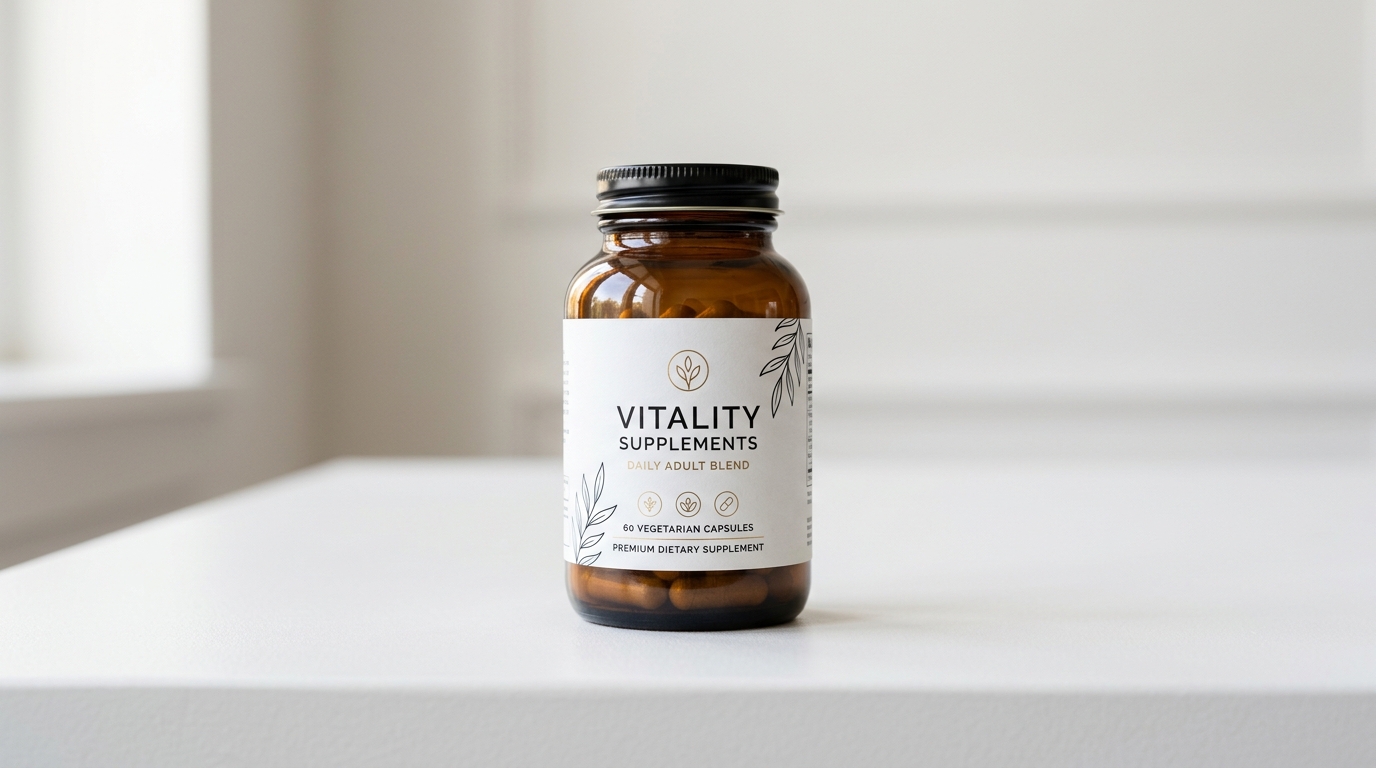
Amazon dietary supplement rules require authentic physical photos for packaging verification and strict legibility for Supplement Facts panels.
Amazon enforces some of its strictest catalog controls on dietary supplements. Under Amazon Seller Central Help Document G55N3JF2WQS7RVNE (Dietary Supplements Policy and Documentation Standards), Amazon explicitly mandates that all packaging images submitted for compliance review must be authentic, unaltered photographs of the physical product and not computer- or AI-generated. Submitting 3D digital renders, Photoshop packaging mockups, or synthetic label mockups triggers immediate rejection and account health flags.
On the public product detail page, Amazon requires pure white backgrounds for the hero bottle (RGB 255, 255, 255, filling at least 85% of the frame), complete legibility of the Supplement Facts panel and ingredient list without pixelation at 1,000px+ hover zoom, and the total exclusion of unverified therapeutic disease claims. While AI generators can help design secondary lifestyle scenes and scale visualizers, letting an AI generate packaging typography or nutrition panels frequently mutates net weights, invented serving counts, and hallucinated dosages that lead straight to ASIN suppression.
This comprehensive guide details the exact 2026 compliance framework across Amazon US, UK, and India, provides the official policy citations, explains which images AI can safely generate versus which must be real photographs, and provides a battle-tested 7-image gallery architecture that maximizes conversion while keeping your listing completely compliant.
Don't build compliant listing images by hand
Paste your Amazon, Flipkart, Walmart, or Meesho product link or upload phone shots. Picmato plans a 9-image set for your product: studio white-ground hero, lifestyle scenes, and feature infographics.
How to Build a Compliant and High-Converting Amazon Supplement Image Gallery
Step-by-step procedure to photograph, verify, and design a compliant 7-image gallery for dietary supplements on Amazon Seller Central.
Capture authentic all-sides physical packaging photographs
Photograph all visible sides of the physical supplement bottle (Front, Back, Left, Right) under clean, diffuse lighting without glare, ensuring all printed text on the Supplement Facts panel is sharply legible.
Create the pure white background hero main image
Position the standalone bottle straight-on against a pure white sweep. Verify with a digital color picker that the background reads RGB (255, 255, 255) across all four corners and that the product occupies 85% to 90% of the frame.
Isolate and inspect the Supplement Facts and ingredient panel
Generate a dedicated high-resolution crop of the Supplement Facts panel. Confirm that serving sizes, active dosages, % Daily Values, and allergen disclosures match the Amazon listing title and backend attributes exactly.
Photograph capsule scale in a human hand
Place an adult hand holding one or two capsules next to a measurement indicator in millimeters to provide customers with an honest, realistic sense of pill size and swallowability.
Design secondary lifestyle in-use and active ingredient infographics
Generate contextual lifestyle scenes showing the supplement in a daily routine (kitchen counter, gym bag) and highlight active ingredient sourcing while strictly avoiding unapproved therapeutic disease claims.
Audit certification seals and upload to Seller Central
Incorporate only verified, active third-party quality marks (cGMP, Non-GMO, Third-Party Lab Tested). Export all assets at 2,000x2,000 pixels or higher and upload to Seller Central.
What changed for dietary supplements on Amazon in 2026?
Selling vitamins, minerals, and dietary supplements (VMS) on Amazon has undergone a fundamental regulatory shift. Historically, brands could upload digital packaging artwork (often PDF vector files from label printers exported as flat JPEGs) and pass basic listing reviews. That era is definitively over. Amazon's Product Assurance and Safety teams now deploy automated vision-language audits alongside mandatory third-party Testing, Inspection, and Certification (TIC) protocols.
Under current enforcement, Amazon cross-examines the text printed on your physical packaging against your product title, backend attributes, and Certificate of Analysis (COA). If your product title claims '1,000 mg Vitamin C per Serving' but the physical label photograph shows '500 mg per capsule (2 capsules per serving)', automated crawlers flag the listing for attribute mismatch. Furthermore, Amazon's compliance algorithms actively scan listing galleries for unauthorized structure/function claims, missing FDA disclaimers, and unapproved health benefits.
Amazon also monitors customer returns and review velocity for supplement listings. When customers return bottles citing 'not as described' or complain that capsules are significantly larger than expected, Amazon's automated systems trigger an image quality review, requesting updated photographs of all sides of the physical bottle under pain of listing suppression within 14 business days.
- Mandatory physical packaging photo audits replacing digital 3D/CAD renders during gating
- Automated OCR matching between listing titles, backend attributes, and printed label text
- Strict verification of Supplement Facts panel legibility at hover-to-zoom resolutions
- Immediate suppression of listings displaying prohibited therapeutic or disease-treatment claims
- Integration of third-party lab testing verification linked directly to physical batch packaging
The strict compliance rule: Why packaging proofs must not be AI-generated (G55N3JF2WQS7RVNE)
The most critical compliance hurdle facing modern supplement sellers is Amazon's explicit ban on synthetic and computer-generated packaging proofs. When a seller applies to sell in Dietary Supplements or appeals a compliance suppression, Seller Central prompts them to submit photographs showing 'all sides of the product packaging'.
In Seller Central Help Document G55N3JF2WQS7RVNE, Amazon's policy explicitly states: 'All documents and images provided are authentic, in their original, unmodified format, and not computer or AI-generated.' This single sentence creates a bright legal line between commercial marketing artwork and compliance evidence.
Why does Amazon enforce this rule so strictly? Generative AI tools and 3D rendering engines (such as KeyShot, Blender, or Midjourney) make it effortless to generate flawless, pristine bottles. However, synthetic renders frequently obscure or omit mandatory warning statements, tamper-evident neck bands, accurate net weight declarations, and real manufacturer addresses. When human compliance auditors or automated image forensic models detect CGI smoothing, synthetic lighting artifacts, or AI pixel hallucination on a compliance submission, the entire application is rejected as non-authentic.
The table below contrasts the distinct standards required for compliance submission images versus public detail page gallery images:
| Requirement Dimension | Compliance Verification Images (Seller Central G55N3JF2WQS7RVNE) | Public Detail Page Images (Gallery & A+) |
|---|---|---|
| Primary Purpose | Regulatory proof, authenticity audit, and TIC verification | Shopper education, brand storytelling, and conversion |
| Permitted Formats | Real physical photos only; raw JPEGs or PNGs | Studio photos, graphic infographics, and lifestyle visuals |
| Computer / AI Generation | Strictly prohibited: 'not computer or AI-generated' | Permitted for secondary lifestyle and scale; prohibited for label facts |
| Coverage Required | All sides of packaging: Front, Back, Left, Right, Top, Bottom | Front view hero, Supplement Facts, scale in hand, lifestyle |
| Background Standard | Neutral, clean background; natural studio lighting | Hero must be pure white (RGB 255, 255, 255); gallery has creative freedom |
| Text Overlays & Badges | Zero text overlays, arrows, or callouts; physical label only | Graphic callouts permitted on secondary images; zero text on hero |
The Supplement Facts panel: Exact legibility and formatting standards
The Supplement Facts panel is the single most critical graphic asset on a dietary supplement detail page after the hero bottle. In the United States, dietary supplement labeling is governed by the Food and Drug Administration (FDA) under 21 CFR § 101.36. Amazon requires that shoppers be able to read every word, milligram value, and daily value percentage directly from the detail page before purchasing.
A common mistake among sellers is creating a small, low-resolution photograph of the back of the bottle where the tiny 6-point label font becomes an unreadable blur of pixels when zoomed. Amazon's image requirements specify a minimum of 1,000 pixels on the longest side to activate hover-to-zoom, with 1,600 to 2,000 pixels strongly recommended. If a shopper cannot zoom in and read the exact serving size, magnesium compound type, or gelatin capsule source, bounce rates spike and returns multiply.
To ensure compliance and maximize conversions, your Supplement Facts image must follow strict design rules:
First, photograph the actual label flat or shoot a high-resolution, uncompressed macro crop of the physical bottle. If you provide a graphic re-typeset panel alongside the photo, ensure every single word, capitalization, and punctuation mark matches the physical label verbatim. Discrepancies between a graphic panel and the bottle label are flagged by automated bots as deceptive marketing.
Second, maintain strict high contrast: dark black text on a clean, solid white background, enclosed within the mandatory FDA hairline box. Never use decorative script fonts, low-contrast pastels, or transparent backgrounds that compromise legibility on mobile devices.
- Serving Size and Servings Per Container prominently displayed at the top
- Mandatory dietary ingredients listed with quantitative amounts by weight (mg, mcg, IU)
- Percent Daily Value (% DV) clearly stated for all established reference nutrients
- Proprietary blends must declare total weight and list constituent ingredients in descending order of predominance
- Complete 'Other Ingredients' declaration (capsule shell, flow agents, fillers, colorings)
- Bold allergen advisory statement (e.g., 'Contains: Soy', 'Manufactured in a facility that processes milk, tree nuts, wheat')
The net weight, capsule count, and serving size trap: Why AI text fails
Generative AI models have revolutionized e-commerce background creation, but using AI to generate or alter supplement bottle labels is a dangerous trap. Modern image diffusion models and vision-language generators do not understand chemistry, pharmacology, or regulatory arithmetic; they generate pixels based on statistical patterns.
In controlled testing across product packaging, AI image generators consistently exhibit severe alphanumeric corruption. For instance, an input prompt specifying '60 Vegetarian Capsules' is frequently rendered by generative models as '160 Capsules', '60 Capsuls', or even nonsensical strings like '60 CAPLSLETS'. Similarly, net weight declarations like 'Net Wt. 8.4 oz (240g)' are routinely altered into nonsensical fractions or transposed digits.
On Amazon, these subtle hallucinated errors create catastrophic consequences:
1. Listing Mismatch Suppression: If your Amazon listing title states 'Pack of 60 Capsules' but your AI-generated hero image displays a bottle rendered with '120 Tablets', Amazon's automated catalog reconciliation algorithm flags the ASIN for misleading quantity claims.
2. Negative Reviews and A-to-z Guarantee Claims: Customers who receive a 30-day supply after viewing an image that hallucinated '60 Servings' will leave immediate 1-star reviews accusing the brand of fraud and short-shipping.
3. Fair Pricing Violations: Amazon evaluates unit pricing based on declared count. An image misrepresenting pack quantity can trigger price-gouging warnings.
The golden rule for supplement sellers: Never use AI to paint, re-typeset, or touch up the physical text on your supplement bottle. Capture an authentic, high-resolution photo of the physical container, and restrict AI generation strictly to background scenes, lifestyle environments, and scale references.
Prohibited disease claims, structure/function claims, and clinical promises
The line between a permitted structure/function claim and an illegal drug claim is the single biggest cause of supplement ASIN removals on Amazon. Under the Dietary Supplement Health and Education Act of 1994 (DSHEA) and the Federal Trade Commission (FTC) Health Products Compliance Guidance, dietary supplements may never claim to diagnose, treat, cure, mitigate, or prevent any disease.
Amazon's listing scanner, powered by optical character recognition (OCR) and natural language processing, continuously inspects both the text in your listing bullets and the text embedded directly inside your secondary gallery infographics. If an infographic contains forbidden keywords, your listing is suppressed automatically without prior warning.
Here is the strict distinction between legal claims and banned disease claims on Amazon listing images:
| Claim Category | Permitted on Amazon Supplement Images | Strictly Prohibited (Triggers ASIN Suppression) | Governing Regulatory Reference |
|---|---|---|---|
| Joint & Bone Health | 'Supports joint flexibility and cartilage health' | 'Relieves arthritis pain', 'Cures osteoarthritis', 'Anti-inflammatory drug alternative' | FDA 21 CFR § 101.93; FTC Health Guidance |
| Immune Support | 'Promotes a healthy, robust immune response' | 'Protects against influenza, COVID-19, colds, or viral infections' | Amazon Prohibited Product Claims Policy |
| Sleep & Relaxation | 'Helps promote calm, restful sleep cycles' | 'Treats clinical insomnia, anxiety disorders, or depression' | FDA Structure/Function Guidance |
| Cardiovascular & Blood Sugar | 'Supports healthy cardiovascular function within normal range' | 'Lowers blood pressure, reverses diabetes, unclogs arteries' | FDA Warning Letter Precedents |
| Cognitive & Brain Function | 'Supports focus, mental clarity, and memory retention' | 'Prevents Alzheimer's disease, dementia, or ADHD' | Amazon Seller Central Restricted Medical Claims |
| Weight Management | 'Complements a healthy diet and active exercise routine' | 'Burns belly fat without diet or exercise', 'Clinical cure for obesity' | FTC Deceptive Advertising Standards |
Which supplement listing images can be AI-generated vs which must be real photos?
While packaging proofs submitted to Seller Central for compliance gating must strictly be 100% real photographs, what about your public listing gallery? Many sellers wonder whether they can leverage AI to accelerate content production without running afoul of marketplace terms.
The answer is nuanced: AI can be safely used for context, environment, and lifestyle staging, but must be strictly kept away from factual product specifications, ingredient labels, and certification seals. Amazon, Walmart, and Flipkart each require that the product delivered to the customer's doorstep matches the visual representation on the detail page in every material respect.
Here is the complete breakdown of which supplement shots in your listing gallery can be created with AI assistance and which must remain authentic photography:
| Gallery Shot Type | Can It Be AI-Generated? | Required Seller Input / Source | Risk Level | Mandatory Compliance Rules |
|---|---|---|---|---|
| Main Hero Bottle (Slot 1) | Hybrid: Real bottle composited onto white, or directed studio render | Real photo of physical bottle; color picker check | Medium | Must be pure white (RGB 255, 255, 255); product fills >=85%; zero props or badges |
| Supplement Facts & Ingredients (Slot 2) | No: Must be authentic photo or verified vector artwork | Physical label photograph or printer vector proof | High | 100% legible; matches physical pack verbatim; zero missing allergens |
| Active Compound Spotlight (Slot 3) | Yes: Graphic layout with real product bottle | Verified formula data sheet (e.g. 500mg Ashwagandha KSM-66) | Low | Quantities must match label; no unapproved clinical claims |
| Capsule Scale In-Hand (Slot 4) | Yes: AI human hand with authentic capsule reference | Real photo of the actual pill, capsule, or gummy | Low | Scale must be strictly realistic; dimensions in mm recommended |
| Lifestyle Daily Routine (Slot 5) | Yes: AI generated environment and scene | Authentic bottle reference placed in contextual scene | Low | Scene must depict truthful use case; no misleading props implying extra goods |
| Certifications & Testing (Slot 6) | No: AI must not invent certification seals | Verified third-party testing reports (cGMP, NSF, USP, Non-GMO) | High | Seals must represent active, valid certifications; no outdated awards |
| Target Audience & Usage Guide (Slot 7) | Yes: Graphic infographic with lifestyle portrait | Target demographic and verified dosage guidelines | Low | Include physician consultation disclaimer for pregnant/nursing users |
The high-converting 7-image supplement gallery architecture
Top-performing supplement brands on Amazon do not upload random photographs. They structure their 7 primary gallery slots into an intentional psychological narrative designed to answer customer objections, build clinical trust, and eliminate return friction.
Here is the battle-tested 7-image gallery blueprint tailored specifically for dietary supplement listings on Amazon, Flipkart, and Walmart:
Slot 1: The Pristine Hero Shot. A high-resolution, glare-free frontal photograph of the supplement bottle or pouch on a pure white background (RGB 255, 255, 255). The container must fill at least 85% of the frame, showing the brand logo, product title, and net quantity with crystal clarity. No seals, no floating fruit, and no drop shadows that bleed into grey.
Slot 2: The Supplement Facts & Clean Label Breakdown. A crisp, high-contrast close-up of the official Supplement Facts panel paired with clean callouts highlighting key dosages, serving sizes, and the 'No Artificial Fillers' pledge. Shoppers check this image immediately to inspect nutrient forms (e.g., Magnesium Glycinate vs Magnesium Oxide).
Slot 3: Key Active Ingredients & Bioavailability. Visualizes why your formula works. Feature the source of your active ingredients (e.g., wild-harvested elderberry, fermented amino acids, standardized herbal extracts) and explain absorption mechanisms (e.g., 'Enhanced with BioPerine for 2000% higher absorption').
Slot 4: Capsule Scale, Serving Size & Texture in Hand. The number one reason customers return supplements after opening the package is difficulty swallowing large horse pills. Show an adult hand holding a single dose (e.g., 2 softgels) with clear millimeter dimensions (e.g., '18mm easy-swallow softgel') and highlight sensory characteristics (smooth coating, zero aftertaste, gentle on stomach).
Slot 5: Lifestyle In-Use & Daily Ritual. Places your supplement in the shopper's daily routine: sitting on a morning kitchen marble counter alongside a glass of water, packed neatly in an office travel pouch, or resting on a gym bench. Contextual lifestyle scenes help shoppers visualize incorporating the product into their lifestyle.
Slot 6: Quality Control, Manufacturing & Purity Seals. Displays authenticated quality certifications: Made in a cGMP-Certified Facility, Third-Party Lab Tested for Heavy Metals and Purity, Non-GMO Project Verified, Gluten-Free, and Vegan. Every seal shown must have verifiable documentation behind it.
Slot 7: Who It Is For & Daily Dosage Regimen. A clear summary infographic outlining who benefits most from the product (e.g., athletes, busy professionals, seniors), the recommended daily intake (e.g., 'Take 2 capsules daily with morning meal'), and who should consult a physician prior to use.
Regional variations: Amazon US vs Amazon UK/EU vs Amazon India (FSSAI)
Supplement regulations differ dramatically across international Amazon marketplaces. A gallery compliant on Amazon.com will trigger immediate rejections if uploaded without modification to Amazon.in or Amazon.co.uk.
Amazon US (FDA & DSHEA): Governed by 21 CFR Part 101. Requires the standard 'Supplement Facts' title box. Any structure/function claim must display the exact two-sentence FDA disclaimer within an adjacent box. California Proposition 65 warnings must be integrated if lead, cadmium, or heavy metal levels exceed safe harbor limits.
Amazon UK and EU (EFSA & EU AI Act): In the United Kingdom and Europe, the term 'Dietary Supplement' is replaced by 'Food Supplement'. You may only make health claims listed on the European Food Safety Authority (EFSA) Register of Authorized Health Claims. Crucially, under Article 50 of the EU AI Act, any AI-generated marketing imagery displaying synthetic human performers or synthetic environments must carry identifiable digital metadata or visible labeling indicating AI generation.
Amazon India (FSSAI & Legal Metrology): Governed by the Food Safety and Standards (Health Supplements, Nutraceuticals) Regulations. The front of pack must display the green vegetarian dot symbol or brown non-vegetarian square symbol, the prominent words 'HEALTH SUPPLEMENT' or 'NUTRACEUTICAL', and the mandatory advisory: 'NOT FOR MEDICINAL USE'. The physical packaging image must also visibly display the 14-digit FSSAI license number and Legal Metrology declarations (MRP, net quantity, consumer care details).
- Amazon US: FDA Supplement Facts box, mandatory DSHEA disclaimer, Prop 65 compliance
- Amazon UK/EU: EFSA authorized health claims only, 'Food Supplement' designation, EU AI Act synthetic media disclosures
- Amazon India: Mandatory 14-digit FSSAI licence logo, Veg/Non-Veg dot symbol, Legal Metrology MRP and net weight display
How to photograph supplement bottles without studio glare
Dietary supplement packaging presents severe photographic challenges. Amber glass bottles, glossy high-density polyethylene (HDPE) plastic tubs, and metallic foil labels act as mirrors, catching harsh reflections from studio lights that blow out label text and create unsightly hot spots.
To photograph supplement bottles cleanly with a DSLR or modern smartphone before generating your listing assets:
1. Use Large, Diffuse Light Sources: Never use a bare on-camera flash. Use two large softboxes (at least 60x90cm) positioned at 45-degree angles to the sides of the bottle, fitted with double diffusion baffles to create smooth, even gradient reflections along the bottle's edges rather than harsh pinpoints.
2. Implement Polarizing Filters: Mount a circular polarizing filter (CPL) on your camera lens. Rotating the CPL allows you to cut polarized glare from glossy plastic caps and amber glass surfaces, making the printed typography readable.
3. Use Black and White Foam Flags: Place black foam boards ('flags') just outside the camera frame on both sides to define the bottle's edges with clean dark reflections. Use white bounce cards in front to fill shadows under the cap rim.
4. Shoot at 85mm to 100mm Focal Lengths: Wide-angle lenses (such as 24mm or standard smartphone 1x lenses held close) create severe barrel distortion, making cylindrical bottles look bulbous and warped. Step back 6 to 8 feet and use a telephoto lens (or the 3x/5x optical telephoto lens on high-end smartphones) to keep bottle sides perfectly parallel.
5. Clean Every Bottle with Microfiber and Alcohol: Supplement labels reveal every fingerprint, dust speck, and adhesive residue under high-resolution zoom. Wipe the container thoroughly with isopropyl alcohol before placing it on the shooting table.
How Picmato supports supplement sellers (within strict compliance boundaries)
Picmato is engineered specifically to help marketplace sellers produce high-converting, professional listing sets while adhering to platform guardrails.
Here is exactly how Picmato fits into a compliant supplement workflow:
Tailored Listing Templates: When you analyze a product or paste an Amazon, Flipkart, Walmart, or Meesho URL, Picmato plans a cohesive 9-image listing set tailored to your product. For health and supplement products, the system recommends templates like Feature Spotlight, Ingredients, Daily Routine Lifestyle, and Scale in Hand.
Grounded in Real Photography: Picmato does not invent fake supplement bottles from scratch. You upload authentic photos of your physical product (up to 12 clear images in JPG, PNG, WebP, or HEIC format). The engine uses your authentic container as the visual anchor.
Plain White Ground Delivery: Picmato directs the main hero image to a clean white studio background. While AI renderers produce near-white values (~RGB 250-254) which are mechanically lifted, sellers should always inspect output with a color picker before uploading to Amazon Seller Central.
High-Resolution Exports: Generate finished listing assets at 1K on Starter, and up to 2K and 4K on Pro and Max tiers, ensuring that secondary lifestyle and infographic images remain pin-sharp on retina and high-DPI screens.
What Picmato Does NOT Do: In strict alignment with our claims ledger, Picmato does not verify legal or medical compliance, does not invent clinical substantiations, and does not certify your listing against FDA, FSSAI, or FTC regulations. Supplement Facts panels, dosage tables, and regulatory warnings should always be supplied as authentic physical photography.
Frequently asked questions
Can I use AI-generated product images for dietary supplements on Amazon?
Yes for secondary lifestyle and scale images, but NO for compliance submissions and label facts. Amazon Seller Central Document G55N3JF2WQS7RVNE strictly prohibits computer- or AI-generated packaging proofs during gating or verification audits. On detail pages, the main hero bottle can use studio composition, but the Supplement Facts panel and on-pack ingredient text must be real, legible photographs.
What image resolution does Amazon require for dietary supplements?
Amazon requires a minimum resolution of 500 pixels on the longest side to upload, and at least 1,000 pixels to activate hover-to-zoom. For dietary supplements, 1,600 to 2,000 pixels (or 2K/4K exports) are strongly recommended so shoppers can inspect small label fonts and ingredient dosages without pixelation.
Why was my supplement listing suppressed by Amazon's image scanner?
Common triggers include: an off-white background on the hero image (not RGB 255, 255, 255), the product occupying less than 85% of the frame, prohibited disease claims embedded in secondary infographic images (e.g., 'cures inflammation'), illegible Supplement Facts panels, or a discrepancy between the bottle capsule count and the listing title.
Can I put star ratings or customer review quotes on supplement images?
No. Amazon's product image and A+ Content policies explicitly prohibit embedding customer reviews, star ratings, or quotes in listing images. Badges like 'Best Seller' or '#1 Customer Choice' are also strictly prohibited on detail page graphics.
What is the difference between structure/function claims and disease claims on images?
Structure/function claims describe how a nutrient affects normal bodily function (e.g., 'Supports bone density') and are legal under DSHEA when accompanied by the FDA disclaimer. Disease claims assert that a product treats, mitigates, prevents, or cures a medical condition (e.g., 'Relieves osteoporosis') and are strictly banned on dietary supplement listings.
Do I have to photograph all sides of the supplement bottle?
Yes for Seller Central compliance verification audits. Amazon requires clear photographs showing all visible panels of the retail packaging (Front, Back, Left, Right, Top, Bottom) so compliance reviewers can verify the Supplement Facts panel, manufacturer address, and ingredient listings.
Does Picmato verify if my supplement claims are FDA or FSSAI compliant?
No. Picmato plans and generates creative lifestyle, feature spotlight, and scale visualizers from your product photos. It does not verify legal or medical claims, read back rendered copy for regulatory approval, or guarantee compliance with FDA, FSSAI, or marketplace rules. Brand owners remain solely responsible for claims substantiation.
Related on Picmato
Sources
- Amazon Seller Central Help Document G55N3JF2WQS7RVNE: Dietary Supplements Policy and Documentation Standards
- U.S. Food and Drug Administration (FDA), 21 CFR Part 101 § 101.36: Nutrition Labeling of Dietary Supplements
- Federal Trade Commission (FTC), Health Products Compliance Guidance (December 2022 / 2024 updates)
- Amazon Seller Central Product Image Requirements (Document G1881)
- Food Safety and Standards Authority of India (FSSAI), Compendium of Food Safety and Standards (Health Supplements, Nutraceuticals) Regulations
- FoodLabelMaker: Amazon Dietary Supplement Packaging Compliance Standards & AI Image Policy Analysis (June 2026)